Civil engineering and construction is an industry where it is mandatory not to allow water to penetrate very important infrastructure. Over decades, engineers have been using conventional approaches such as waterstops of PVC to seal the joints between the new concrete and the old one.
Nevertheless, there is a more effective, intelligent technology: the hydrophilic swell bar.
This new material is radically transforming the way we go about the process of waterproofing and it is an active sealing process which in most cases is superior to its traditional counterparts in terms of ease of application and long-term viability.
The Issue with the Perfect Pour
Older waterstops must be properly placed and concrete pours made perfectly around them to develop passive physical barrier. Without the proper vibration of concrete, or settling of the structure slightly, a crack may develop making the whole barrier ineffective.
Place the swell bar, which is a ground breaking self-sealing technology, in the solution.
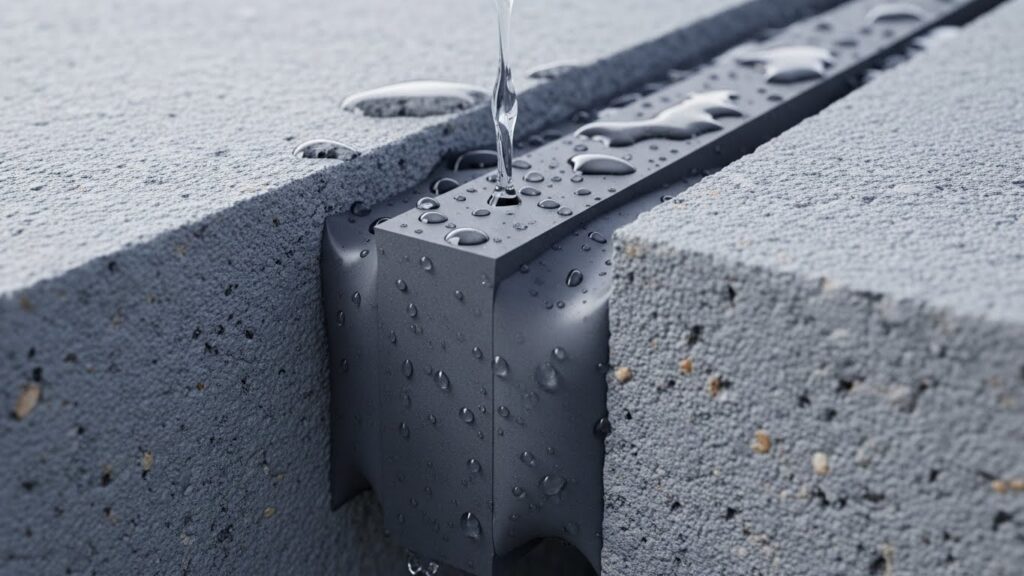
An Account of how the Swell Bar acquires Water (and Wins).
The trick is in the fact that the material composition of the bar is unique, usually it is a mixture of specialized synthetic rubbers or bentonite clay combined with superabsorbent polymers.
The swell bar is hydrophilic or in other words, loves water unlike a passive barrier. The process of active sealing is the following:
Expansion:
The result of this absorption is the safe expansion of the bar, frequently to 400 per cent. of its original dimensions in the restricted joint-space.
The Compression Seal:
This swelling produces an instant pressure upon the concrete walls and actually seals the microscopic voids or cracks or fissures with an impervious compression seal.
More importantly, this is a reversible process. When the joint becomes dry, shrinkage of the bar takes place and swelling reappears with the retention of water. This guarantees decades of dynamic protection that is reliable.
Best 3 Benefits Compared to the traditional methodologies.
The transition to swell bars is motivated by the great practical advantages of the construction site:
1. Installation Simplicity
The classic waterstop requires two distinct concrete pours that require a lot of planning, and attention to get right. Swell bars are merely glued or mechanically attached to the face of the first pour of concrete, and then the second pour is made. This radically saves on labor time and installation errors.
2. The Eastern Sealing in Flaws of Conditions.
The concrete surfaces are usually rugged or uneven. A rigid PVC waterstop may fail to fit into these surfaces. The swell bar is flexible and its expansive structure enables it to shape itself to all shapes and seal securely where others have failed to do so.
3. Complex Shapes Versatility.
Half-work Sealing around complex penetrations, such as pipes or cable ducts extending through a wall, is infamiously hard with conventional flat waterstops. These circular objects can be covered with flexible swell bars that can give a smooth and reliable protection against water migration.
Where Sealant Location of This Intelligent Sealant.
Engineers constructing water-sensitive infrastructure that is critical in nature use hydrophilic swell bars:
Basements and Foundations:
Providing living and working areas below grade that are dry and free of any leakages.
Tunnels and Underground Vaults:
The defense of critical transit and utility networks.
Water Treatment Facilities:
Liquids in the treatment tanks and the reservoirs.
Swimming Pools and Marine Structures:
Sealing of aquatic environments with reliable and chemical-resistant sealing.
The hydrophilic swell bar may operate quietly behind the scenes, but its impact on waterproofing performance is monumental. As the next generation of intelligent, proactive waterproofing solutions, it offers exceptional strength, long-term resilience, and adaptability to protect concrete construction joints from water ingress.
NM GEO SYNTHETIC is a trusted supplier of high-quality hydrophilic swell bars, delivering reliable products designed to meet the demands of modern infrastructure and construction projects. Our solutions ensure durable, watertight protection for foundations, basements, tunnels, retaining walls, and water containment structures.